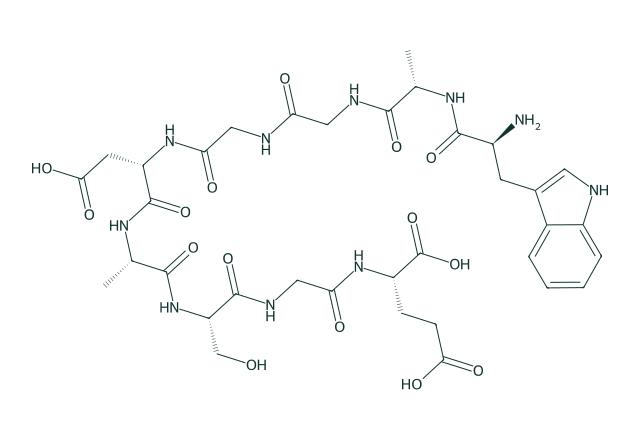
DSIP
Deep-sleep peptide
Also known as Delta sleep-inducing peptide
- Evidence grade
- CSmall or early human studies onlyScale
- Half-life
- Minutes, cleared rapidly
- Schedule
- Once before bed, subcutaneous
- Maintenance amount
- 100 mcg
- Vial sizes sold
- 5 mg
Where a value is not established in people, this table says so rather than filling the box.
DSIP, delta sleep-inducing peptide, is a naturally occurring neuropeptide first identified for its link to slow-wave sleep. It has been studied in humans for insomnia, pain and stress regulation with mixed results.
DSIP crosses the blood-brain barrier and appears to interact with sleep-regulating and neuroendocrine systems, though no single receptor has been confirmed. It may influence release of hormones like corticotropin and somatostatin and shows a daily rhythm that tracks temperature and sleep stages. Proposed effects include modulation of stress hormones and a mild antioxidant role. Human trials are old, small and inconsistent.
Human evidence rests on a handful of small, older sleep trials with mixed and often modest findings.
- Studied for improving sleep onset and quality in some insomnia patients
- May help regulate stress-hormone responses
- Explored for pain modulation and general recovery
- Non-sedating profile compared with sleep drugs
- Headache or grogginess
- Injection-site irritation
- Inconsistent effects across users, with some reporting nothing
- Long-term safety in humans is poorly characterized
A summary of the research, not medical advice. Individual benefits and risks vary, and for some of these compounds the human evidence is still early.
DSIP is studied for its link to slow-wave sleep. Reports commonly describe an effect on sleep quality the same night it is used, with more consistent circadian changes described over one to two weeks of regular use.
Read the full timeline →Drawn from published trial data and how the research community commonly describes this stretch. Not a fixed schedule and not medical advice.
Once before bed, subcutaneous. For research reference only, not medical advice.
| Phase | Amount |
|---|---|
| Ongoing | 100–300 mcg at night |
Effects are inconsistent across users. Reference practice only.
A rough shopping estimate at the maintenance amount. Your real needs shift with your dose and titration.
| Item | 8-week plan | 12-week plan | 16-week plan |
|---|---|---|---|
| Peptide vials (5 mg) | 2 | 2 | 3 |
| Insulin syringes (U-100) | 56 | 84 | 112 |
| Bacteriostatic water (10 mL) | 1 | 1 | 1 |
| Alcohol swabs (100-count box) | 1 | 1 | 2 |
Lyophilized: Keep the sealed powder cold and dark, near -20 °C, dry and out of light.
Reconstituted: Refrigerate the mixed vial at 2 to 8 °C and use within about 2 to 3 weeks.
Let a cold vial reach room temperature before you open it, so it takes on less condensation.
How strong is the evidence for DSIP?
We grade it C on a four-point scale. A handful of small, older sleep trials with mixed and modest findings.
What is the half-life of DSIP?
Minutes, cleared rapidly. That is the figure the reported dosing frequency follows from.
What amount of DSIP is used in the research?
Ongoing: 100–300 mcg at night. Effects are inconsistent across users. Reference practice only.
How is DSIP stored once reconstituted?
Refrigerate the mixed vial at 2 to 8 °C and use within about 2 to 3 weeks.