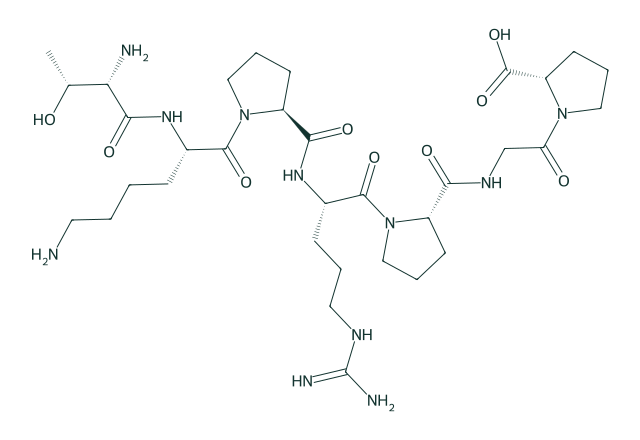
Selank
Calm-focus anxiety peptide
Also known as TP-7, the calm peptide
- Evidence grade
- CSmall or early human studies onlyScale
- Half-life
- Not well characterized in humans
- Schedule
- Daily, intranasal or subcutaneous
- Maintenance amount
- 300 mcg
- Vial sizes sold
- 5 mg, 10 mg
Where a value is not established in people, this table says so rather than filling the box.
Selank is a synthetic heptapeptide derived from the immune fragment tuftsin, developed in Russia as an anxiolytic. It is usually delivered intranasally and studied for anxiety and mental tone.
Selank appears to modulate GABA and serotonin signaling and to influence brain-derived neurotrophic factor and enkephalin activity. It also slows breakdown of enkephalins, which may extend calming and mood effects. Some work links it to changes in immune-related gene expression that could shape stress response. Most detail comes from early laboratory work with limited independent human replication.
Human evidence is limited to small clinical trials, so quality and independent replication are thin.
- Studied for reducing anxiety without strong sedation
- Reported to support steady attention and mental clarity
- May improve mood through effects on BDNF and enkephalin activity
- Non-habit-forming profile in the available research
- Nasal irritation or stuffiness with intranasal use
- Mild fatigue or drowsiness in some users
- Headache
- Long-term human safety data is limited
A summary of the research, not medical advice. Individual benefits and risks vary, and for some of these compounds the human evidence is still early.
Selank is generally reported to produce a calming effect within the same day of use, with cumulative anxiolytic effects described over one to a few weeks of regular dosing.
Read the full timeline →Drawn from published trial data and how the research community commonly describes this stretch. Not a fixed schedule and not medical advice.
Daily, intranasal or subcutaneous. For research reference only, not medical advice.
| Phase | Amount |
|---|---|
| Ongoing | 250–900 mcg daily, split |
Most clinical use is intranasal. Reference practice only.
A rough shopping estimate at the maintenance amount. Your real needs shift with your dose and titration.
| Item | 8-week plan | 12-week plan | 16-week plan |
|---|---|---|---|
| Peptide vials (5 mg) | 4 | 6 | 7 |
| Insulin syringes (U-100) | 56 | 84 | 112 |
| Bacteriostatic water (10 mL) | 1 | 2 | 2 |
| Alcohol swabs (100-count box) | 1 | 1 | 2 |
Lyophilized: Keep the sealed powder cold and dark, near -20 °C, dry and out of light.
Reconstituted: Refrigerate the mixed solution at 2 to 8 °C and use within about 2 to 4 weeks.
Let a cold vial reach room temperature before you open it, so it takes on less condensation.
How strong is the evidence for Selank?
We grade it C on a four-point scale. Small clinical trials only. Independent replication is thin.
What is the half-life of Selank?
It is not well characterized in humans. Published pharmacokinetic data for Selank is thin, so any specific figure you see quoted should be treated with caution.
What amount of Selank is used in the research?
Ongoing: 250–900 mcg daily, split. Most clinical use is intranasal. Reference practice only.
How is Selank stored once reconstituted?
Refrigerate the mixed solution at 2 to 8 °C and use within about 2 to 4 weeks.
- Zozulia AA, et al. Efficacy and possible mechanisms of action of a new peptide anxiolytic selank in generalized anxiety and neurasthenia. Zh Nevrol Psikhiatr Im S S Korsakova. 2008;108(4):38-48.
- Kolomin T, et al. GABA, Selank and Olanzapine Affect the Expression of Genes Involved in GABAergic Neurotransmission. Front Pharmacol. 2017;8:89.