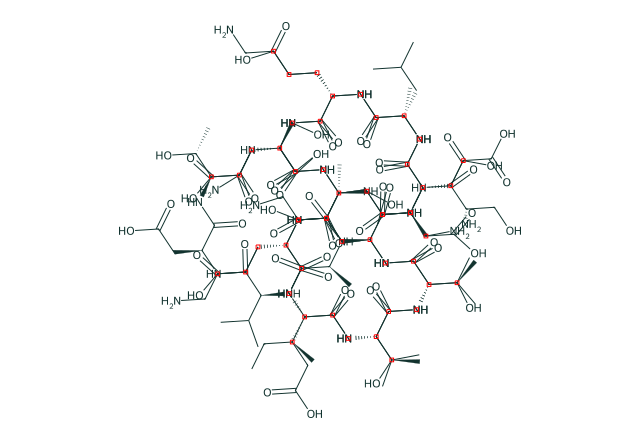
Thymosin Alpha-1
Immune-support peptide
Also known as TA-1, Ta1, Zadaxin, thymalfasin
- Evidence grade
- BHuman trials, not approved for this useScale
- Half-life
- About 2 hours
- Schedule
- Twice weekly, subcutaneous
- Maintenance amount
- 1.60 mg
- Vial sizes sold
- 5 mg, 10 mg
Where a value is not established in people, this table says so rather than filling the box.
Thymosin alpha-1 is a 28-amino-acid peptide originally isolated from the thymus gland. It is used as an immune modulator and is approved in several countries as thymalfasin (Zadaxin) for hepatitis and as an immune adjunct.
It helps mature and activate T cells and dendritic cells, sharpening the immune response to infection. It signals partly through toll-like receptors, shifting immune activity toward a balanced antiviral state. It can dampen excess inflammation while boosting weak immune responses. This is supported by human trials in hepatitis and sepsis.
Human clinical-trial data across hepatitis B and sepsis; approved as Zadaxin in several countries, but not FDA-approved in the US.
- Studied for strengthening immune responses in chronic hepatitis B and C
- Researched as an add-on immune therapy in sepsis and severe infection
- May help balance overactive and underactive immune activity
- Explored as an adjunct alongside vaccines and antiviral treatment
- Injection-site redness or discomfort
- Occasional flu-like feelings or fatigue
- Rare hypersensitivity reactions
- Theoretical concern with modulating immunity in autoimmune conditions
A summary of the research, not medical advice. Individual benefits and risks vary, and for some of these compounds the human evidence is still early.
Thymosin Alpha-1 is approved in several countries as an immune modulator. Reports describe it being used in short cycles, with immune-related markers and subjective wellness changes generally reported over two to four weeks per cycle.
Read the full timeline →Drawn from published trial data and how the research community commonly describes this stretch. Not a fixed schedule and not medical advice.
Twice weekly, subcutaneous. For research reference only, not medical advice.
| Phase | Amount |
|---|---|
| Ongoing | 1.6 mg twice weekly |
| Acute illness | 1.6 mg daily, short term |
Mirrors the approved thymalfasin schedule.
A rough shopping estimate at the maintenance amount. Your real needs shift with your dose and titration.
| Item | 12-week plan | 18-week plan | 24-week plan |
|---|---|---|---|
| Peptide vials (5 mg) | 8 | 12 | 16 |
| Insulin syringes (U-100) | 24 | 36 | 48 |
| Bacteriostatic water (10 mL) | 2 | 3 | 4 |
| Alcohol swabs (100-count box) | 1 | 1 | 1 |
Lyophilized: Keep the sealed powder cold and dark, near -20 °C, dry and out of light.
Reconstituted: Refrigerate the mixed vial at 2 to 8 °C and use within about 1 to 2 weeks.
Let a cold vial reach room temperature before you open it, so it takes on less condensation.
How strong is the evidence for Thymosin Alpha-1?
We grade it B on a four-point scale. Trial data across hepatitis B and sepsis. Approved as Zadaxin in some countries, not in the US.
What is the half-life of Thymosin Alpha-1?
About 2 hours. That is the figure the reported dosing frequency follows from.
What amount of Thymosin Alpha-1 is used in the research?
Ongoing: 1.6 mg twice weekly. Acute illness: 1.6 mg daily, short term. Mirrors the approved thymalfasin schedule.
How is Thymosin Alpha-1 stored once reconstituted?
Refrigerate the mixed vial at 2 to 8 °C and use within about 1 to 2 weeks.