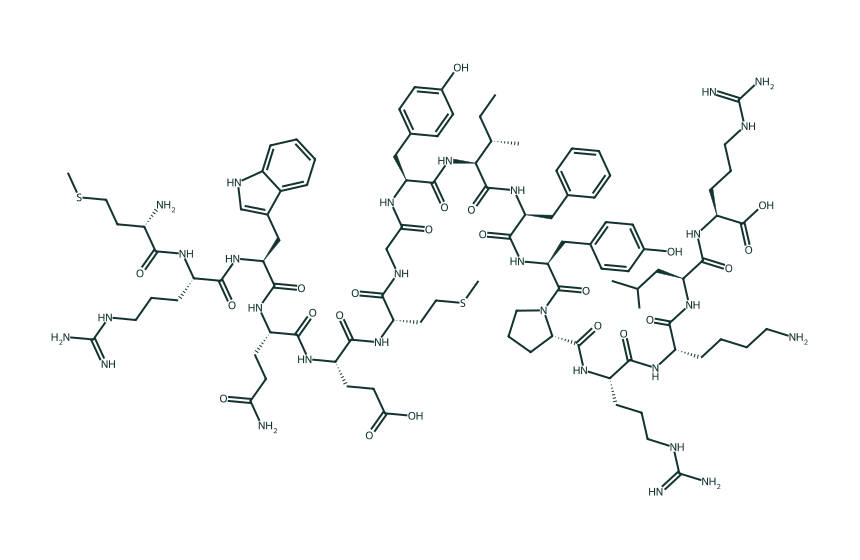
MOTS-c
Energy and metabolism peptide
Also known as MOTS
- Evidence grade
- DNo completed human trialsScale
- Half-life
- Not well characterized in humans
- Schedule
- Two to three times weekly, subcutaneous
- Maintenance amount
- 3.75 mg
- Vial sizes sold
- 5 mg, 10 mg
- Cost per dose
- $23.63
Where a value is not established in people, this table says so rather than filling the box.
A mitochondrial derived peptide studied in early metabolic research.
MOTS-c is a small peptide encoded inside mitochondrial DNA. It acts on the AMPK energy pathway, improving how cells use glucose and respond to insulin, and it appears to shift metabolism toward burning fuel. It is studied as a metabolic and exercise mimetic, but human dosing has not been established.
Human trial data are very limited, so most findings are early-stage research and human benefits are not established.
- Studied for improved insulin sensitivity and metabolic balance.
- May activate AMPK and influence muscle and fat energy use.
- Studied for resistance to weight gain on a high-calorie diet.
- Explored for the link between exercise adaptation and mitochondrial signaling.
- Human safety and dosing are largely uncharacterized.
- Injection-site reactions are plausible with parenteral use.
- Unregulated products carry purity and identity risks.
- Long-term metabolic effects in humans are unknown.
A summary of the research, not medical advice. Individual benefits and risks vary, and for some of these compounds the human evidence is still early.
The first week or so commonly brings a flat, low-energy stretch as AMPK activation resets how cells handle fuel. Most reports describe that easing by day 10 to 14, with steadier energy and better workout recovery showing up by weeks 3 to 4.
Read the full timeline →Drawn from published trial data and how the research community commonly describes this stretch. Not a fixed schedule and not medical advice.
Goal of the protocol. Studied as a metabolic and exercise-mimicking signal for energy and insulin sensitivity.
Two to three times weekly, subcutaneous. For research reference only, not medical advice.
| Phase | Amount |
|---|---|
| Ongoing | 5–10 mg per week, split across doses |
No human dosing is established; this reflects common research reference practice only.
A rough shopping estimate at the maintenance amount. Your real needs shift with your dose and titration.
| Item | 12-week plan | 18-week plan | 24-week plan |
|---|---|---|---|
| Peptide vials (10 mg) | 9 | 14 | 18 |
| Insulin syringes (U-100) | 24 | 36 | 48 |
| Bacteriostatic water (10 mL) | 2 | 3 | 4 |
| Alcohol swabs (100-count box) | 1 | 1 | 1 |
What a course of MOTS-c actually costs, worked from list price and the amount in the schedule above, plus the whole vials a 12-week run would take.
| Supplier | Vial | Price | Per mg | Per dose | 12 weeks | Independent test |
|---|---|---|---|---|---|---|
| Quartz Peptides | 10 mg | $63 | $6.30 | $23.63 | $567 (9 vials) | None on file |
One supplier listed so far for this compound.
List prices, checked September 4, 2026. Sale pricing is ignored on purpose so the table does not swing week to week. Verify before ordering.
Suppliers are listed alphabetically. We do not rank them by price, because the cheapest vial and the one worth buying are rarely the same thing. The column that matters is the last one, and today most of it reads "none on file", including for Quartz Peptides, which is owned by this site’s editor. See the disclosure and the COA guide.
Lyophilized: Keep the sealed powder cool and dark, near -20 °C where possible, dry and out of light.
Reconstituted: Refrigerate the mixed vial at 2 to 8 °C, use within a few weeks and avoid freeze and thaw.
Let a cold vial reach room temperature before you open it, so it takes on less condensation.
How strong is the evidence for MOTS-c?
We grade it D on a four-point scale. Human trial data is very limited, so benefits in people are not established.
What is the half-life of MOTS-c?
It is not well characterized in humans. Published pharmacokinetic data for MOTS-c is thin, so any specific figure you see quoted should be treated with caution.
What amount of MOTS-c is used in the research?
Ongoing: 5–10 mg per week, split across doses. No human dosing is established; this reflects common research reference practice only.
How much does MOTS-c cost?
A 10 mg vial lists at $63 from Quartz Peptides, which works out to $6.30 per mg and about $23.63 per dose at the amount used in research. Prices checked September 4, 2026. Price is not a quality signal, so check the certificate of analysis before ordering from anyone.
How is MOTS-c stored once reconstituted?
Refrigerate the mixed vial at 2 to 8 °C, use within a few weeks and avoid freeze and thaw.